The Real Cost of Resume Screening
How many resumes have you screened this week? 50? 100? Imagine doing that for every role you hire. If you're part of a busy talent acquisition team, you know the drill: endless hours reviewing applications that often lead to a handful of qualified candidates. It's exhausting. It's also inefficient.
Recruiters spend, on average, 23 hours screening resumes for a single hire (source: LinkedIn Talent Solutions). That’s nearly three full workdays dedicated to a task that, let’s be honest, isn’t the best use of anybody’s time. Worse, manual screening is prone to human error. After your 40th or 50th CV, you’re not catching details as sharply as you should be. And that’s not even counting unconscious bias creeping in. Not ideal.
The Hidden Costs of Manual Screening
Before diving into solutions, let’s break down what manual resume screening really costs your organization:
-
Time Costs:
- For every hour spent screening, that’s an hour recruiters aren’t engaging with candidates, conducting interviews, or working on strategic hiring initiatives. If you’re hiring for multiple roles at once, these inefficiencies compound quickly.
-
Human Error:
- Studies show that tired and overworked recruiters are more likely to overlook qualified candidates or let bias influence decision-making. For example, a 2019 study by Harvard Business Review found that recruiters spend only 7.4 seconds on average reviewing a resume before deciding its fate.
-
Missed Opportunities:
- Without scalable tools, recruiters might miss unconventional candidates who don’t fit the traditional mold but could excel in the role. For instance, a freelancer with non-linear experience might have precisely the skills you need but could easily be overlooked in a manual review.
How AI Fits Into Resume Screening
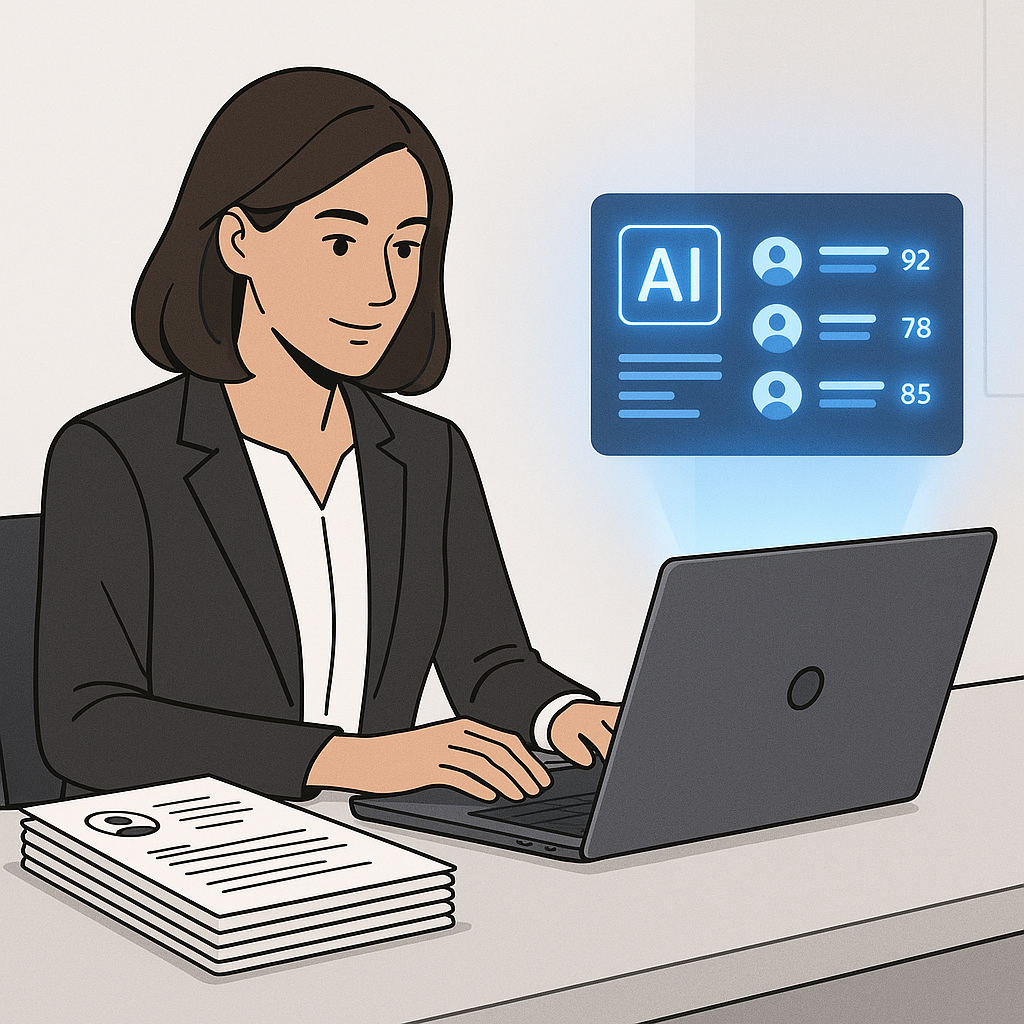
This is where AI hiring tools, like TalentNext, step in. Let’s be clear: AI isn’t magic. It won’t replace recruiters or handle cultural fit decisions. What it will do is handle the grunt work—quickly and consistently. TalentNext’s AI-powered resume screening can process hundreds of resumes in minutes, scoring each one against the specific job description.
Case Study: The Tech Startup That Saved 70%
Take a mid-sized tech company as an example. In one case study, the company reduced their screening time by 70% using AI tools. What used to take three days now takes a few hours. The AI flagged highly relevant candidates they might’ve ignored manually, like a freelancer whose unconventional experience perfectly matched the role.
Here’s how it worked:
- The AI analyzed job descriptions and matched them against resumes using natural language processing (NLP).
- Candidates received a score based on keywords, experience, and skills alignment.
- Recruiters focused only on the top-scoring 10-15% of candidates, drastically cutting down on wasted time.
Actionable Steps to Leverage AI in Hiring
-
Evaluate Your Current Process:
- How much time are you spending on resume screening today? Start by auditing your current workflow to identify inefficiencies.
-
Choose the Right AI Tool:
- Tools like TalentNext, HireVue, and Mya Systems offer AI-driven resume screening. Compare features such as bulk uploading, NLP capabilities, and integration with your existing ATS (applicant tracking system).
-
Set Objective Criteria:
- Ensure that your job descriptions are detailed and clear. The more precise your criteria, the better an AI tool can identify relevant candidates.
-
Pilot Before Scaling:
- Test the tool on a single role before rolling it out across your entire hiring process. Collect feedback from both recruiters and candidates.
Keeping Quality High
There’s a valid concern here: Does speed compromise quality? Not necessarily. AI evaluates resumes based on objective criteria—experience, skills, education—without getting distracted by formatting quirks or personal biases. This ensures every candidate is judged fairly.
But let’s not kid ourselves. AI isn’t perfect. It won’t tell you if a candidate is a cultural fit or if they’ll mesh well with your team. That’s where you come in. Think of AI as your first line of defense, not the whole army. It clears the weeds so you can focus on the flowers.
Example: Balancing AI with Human Judgment
A retail company used AI to screen resumes for a store manager role. While the AI identified candidates with strong operational and leadership skills, the final hiring decision was based on in-person interviews to assess cultural fit and customer service aptitude. The result? A faster process without sacrificing quality.
Bulk Uploads: A Game Changer
One standout feature that makes AI in recruitment a no-brainer is bulk resume processing. Picture this: You’ve just posted a job listing, and 500 resumes flood your inbox within 48 hours. Manually, this would take weeks. With TalentNext, you can upload all 500 resumes at once. The system analyzes and scores them almost instantly, ranking candidates based on their match to the role.
Comparison: Manual vs. AI Resume Screening
| Feature | Manual Screening | AI-Powered Screening |
|---|---|---|
| Time to Review 500 Resumes | 2-3 Weeks | 1-2 Hours |
| Consistency | Varies (prone to fatigue) | 100% Consistent |
| Unconscious Bias | High Risk | Reduced (objective scoring) |
| Candidate Ranking | Manual and subjective | Automated and objective |
But What About Candidates?
You might be thinking, “Sure, this helps recruiters, but what about the candidates?” Fair point. The last thing you want is an impersonal process that leaves job seekers feeling like they’re talking to a robot. TalentNext addresses this by offering AI-driven feedback to applicants. If their resume isn’t landing, they get actionable suggestions to improve it. That levels the playing field and raises the overall quality of applications you receive.
Example: Transparent Feedback for Job Seekers
One marketing professional shared their experience with an AI-powered system. After receiving a rejection, they got detailed feedback suggesting they highlight specific campaign metrics in their resume. They updated their application and secured a similar role within weeks.
The Bottom Line
AI hiring tools aren’t perfect, but they’re a huge step forward. They cut screening time by up to 75%, reduce bias, and ensure you’re spending your time on the right candidates. Tools like TalentNext don’t replace human judgment—they enhance it.
If you're still manually sifting through hundreds of resumes, it’s time to rethink your process. Let AI handle what it’s good at so you can focus on what you’re good at: building relationships and making great hires.
FAQ About AI Resume Screening
1. Can AI completely replace human recruiters?
No. AI is a tool to assist recruiters, not replace them. It handles repetitive tasks like resume screening, but decisions about cultural fit and final hiring remain human responsibilities.
2. How does AI reduce unconscious bias?
AI evaluates candidates based on objective criteria like skills, experience, and education. However, it’s essential to regularly audit the AI system to ensure it isn’t perpetuating biases based on the data it’s trained on.
3. What happens if the AI misses a good candidate?
AI tools aren’t flawless, which is why they should complement, not replace, human judgment. Recruiters should still review borderline cases and adjust criteria as needed.
4. Is AI screening fair to candidates?
Yes, especially when it provides transparent feedback. Candidates receive objective evaluations and actionable suggestions for improvement, which isn’t always the case with manual reviews.
5. Do I need technical expertise to use an AI hiring tool?
Not at all. Most tools, like TalentNext, are designed to be user-friendly and integrate seamlessly with your current hiring systems.
Ready to save hours on resume screening? TalentNext can help. Get started free →