Why Screening Resumes Manually Is a Nightmare
Ever spent 23 hours screening resumes for a single role? That’s the average time recruiters burn on manual screening per hire, according to TalentNext’s own case studies. Let’s face it: it’s inefficient and frustrating. Half the resumes don’t even meet basic qualifications, yet you’re stuck sifting through the pile, hoping the perfect candidate doesn’t get buried under keyword-stuffed fluff.
And it’s not just about time. Manual resume screening is riddled with inconsistencies, human bias, and errors. For instance, a recruiter might overlook a great candidate simply because they don’t use the same terminology as the job description. Say goodbye to qualified candidates like a data analyst labeling themselves a "data storyteller" — just because the phrasing doesn’t match, they’re out of the running.
Filters help, sure. But they’re blunt instruments. They don’t recognize nuance — like a candidate who’s perfect for the job but uses unconventional phrasing. For example, calling themselves a “growth strategist” instead of “marketing manager.” That’s where artificial intelligence steps in.
How AI Screening Changes the Game
AI tools like TalentNext turn resume screening into a smarter process. Instead of just matching keywords, they analyze resumes contextually. They look at how skills and experience align with the job description — even when the wording is unconventional. For instance, TalentNext’s platform doesn’t miss that “growth strategist” applicant because it scores resumes against the overall job description, not just a keyword checklist.
How It Works
AI resume screening tools use natural language processing (NLP) and machine learning algorithms to:
- Understand Context: Instead of seeing "project management" and "managing projects" as two different phrases, the AI reads them as the same skill.
- Analyze Patterns: AI examines the candidate’s career trajectory, looking for logical progressions like promotions or measurable achievements.
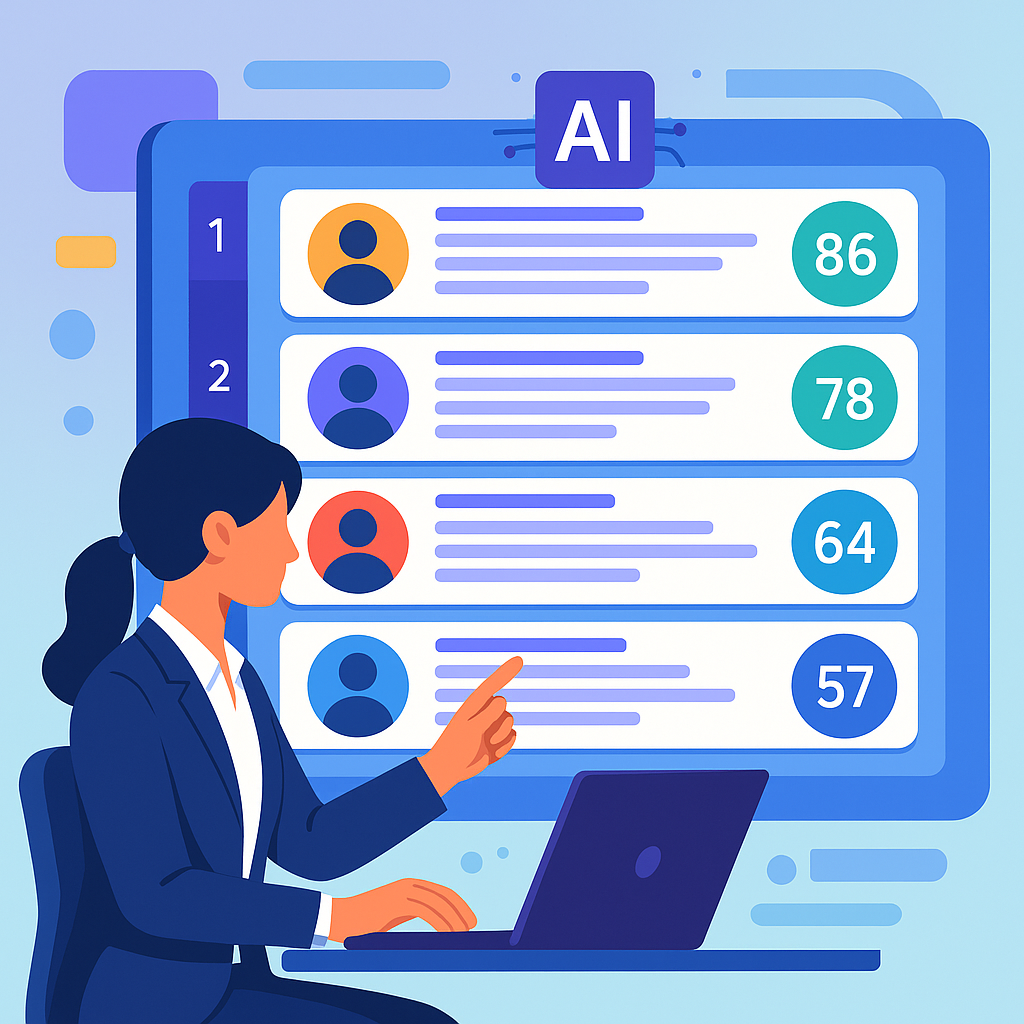
- Score Objectively: The system assigns a relevance score to each resume based on the job description, ranking candidates from strongest to weakest fit.
And here’s the kicker: you can upload hundreds of resumes in bulk. Instead of spending hours on each resume, the tool processes them all at once and spits out a ranked shortlist. It’s fast, accurate, and fair. No human bias, no wasted effort.
Example: AI in Action
Imagine you’re hiring a product manager. You receive 200 resumes. Among them is a highly qualified candidate who doesn’t use the term "roadmap development"—instead, they describe it as "long-term product planning." A manual screener might reject this resume for not using the exact term, but AI tools like TalentNext recognize the similarity and flag the resume as a strong match.
Why Speed Matters — And Accuracy Too
In today’s brutal job market, speed isn’t just nice to have; it’s essential. Top candidates don’t wait around forever. According to a study by Glassdoor, the best candidates are off the market within 10 days. If you’re stuck sorting through hundreds of resumes manually, by the time you find your top picks, they’ve already accepted offers elsewhere. AI screening tools slash that risk by cutting screening time by up to 75%.
The Cost of Delays
A slow hiring process doesn’t just cost you top talent — it costs money. According to SHRM, the average cost-per-hire is around $4,700. The longer the process drags, the more resources and manpower you’re burning. AI tools reduce this waste by streamlining the screening phase.
But speed isn’t everything. Accuracy is just as critical. AI tools ensure every resume is evaluated against the same criteria. That means no variability — every candidate gets scored objectively. Whether they phrased their skills as “data analytics” or “analyzing data,” the system picks up on it.
Actionable Steps to Increase Speed and Accuracy
- Set Clear Job Descriptions: The better your job description, the better the AI can assess resumes.
- Train Your AI Tool: Many platforms allow you to refine their algorithms by providing feedback on ranked candidates.
- Use AI to Complement, Not Replace: While AI speeds up the process, combine it with human oversight for key decisions.
Real-World Example: How TalentNext Helps
Let’s say you’re hiring for a marketing role. You post the job, and within a week, 400 resumes flood your inbox. Would you spend days manually filtering them? Of course not. With TalentNext, you upload all 400 resumes, and the AI instantly scores them based on the job description.
The Output
- Ranked List of Candidates: The top 20 are flagged as strong matches, complete with detailed scorecards explaining why they’re a fit.
- Time Saved: What used to take 20+ hours now takes 20 minutes.
Case Study: A Mid-Sized Tech Company
A tech company hiring for a software engineer role used TalentNext to screen 500 resumes. The AI flagged 50 candidates as top-tier. After human review, 90% of the flagged candidates were invited for interviews, and the company filled the role in 12 days — half the industry average.
Isn’t AI Screening Biased?
That’s a common concern — and it’s valid. But here’s the thing: when done right, AI reduces bias. Instead of relying on subjective impressions (like whether the recruiter liked the candidate’s formatting), every resume is scored using the same objective metrics. TalentNext’s system even accounts for synonyms and phrasing variations, leveling the playing field for candidates who might otherwise get overlooked.
Addressing Bias in AI Tools
- Diverse Training Data: TalentNext ensures its algorithms are trained on resumes from diverse demographics.
- Transparent Scoring: Recruiters can see exactly how candidates are scored, eliminating "black box" concerns.
- Continuous Audits: Regular system updates ensure the tool evolves to recognize and mitigate new biases.
Comparison: Manual vs. AI Resume Screening
| Feature | Manual Screening | AI Screening (e.g., TalentNext) |
|---|---|---|
| Time Spent | 20+ hours per role | 20 minutes |
| Accuracy | Inconsistent | Objective and consistent |
| Bias | Subjective | Reduced through algorithms |
| Scalability | Limited | Handles hundreds of resumes |
| Output Quality | Varies | Ranked, data-driven insights |