Payroll & WPS

Payroll and WPS compliance, run from the same attendance data

Finalised punches turn into welfare heads, statutory GCC deductions and a WPS-compliant payroll run — without a re-keyed spreadsheet in between.
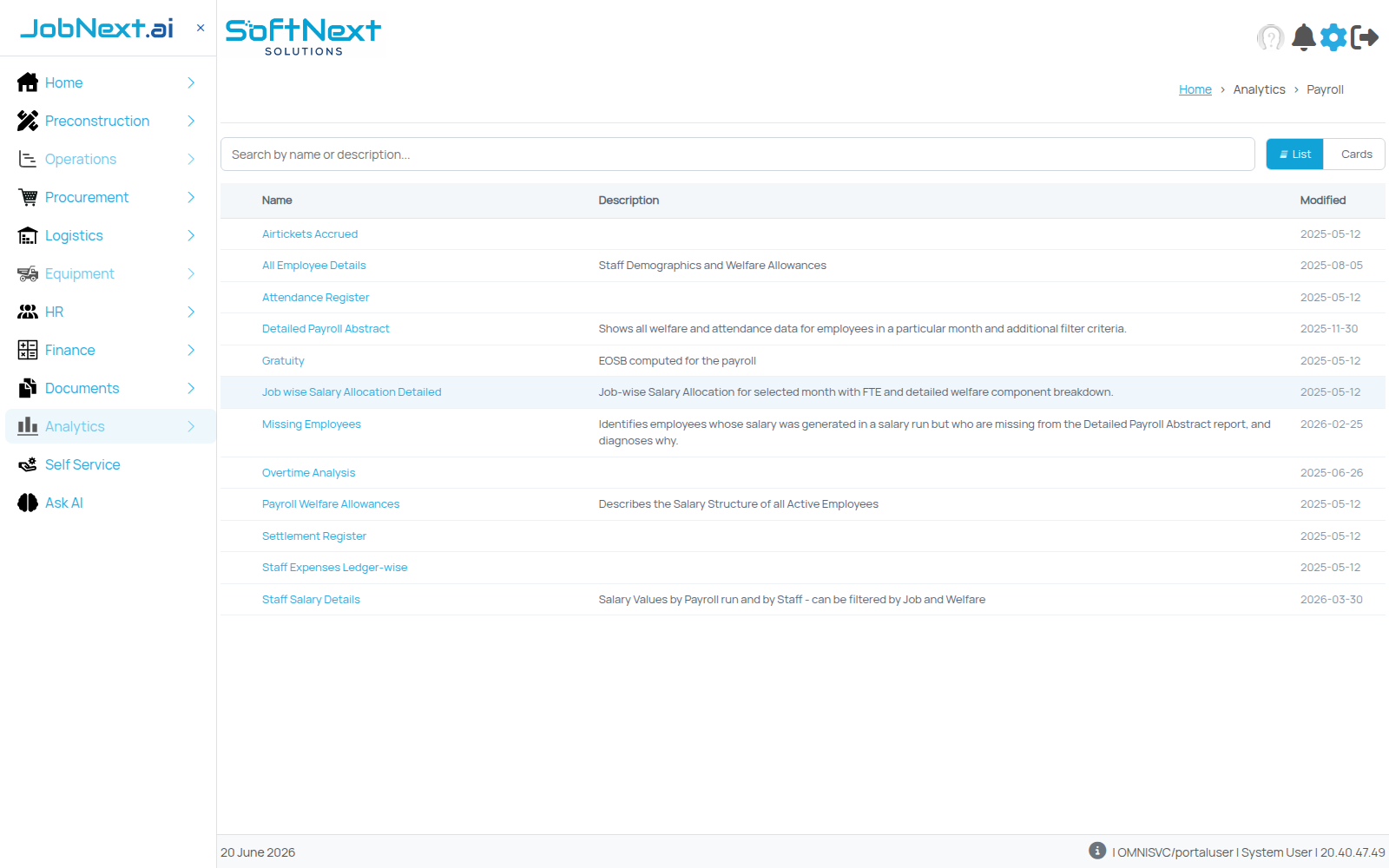
JobNext payroll analytics report list

Payroll reports available once a run is finalised.

What WPS compliance means here

The Wage Protection System is the GCC’s framework for proving wages are paid in full and on time through approved bank channels. JobNext’s payroll is configured with pay grades, overtime rules and WPS compliance built in, so a finalised attendance month can go straight into a WPS-compliant run.

Proven at scale

One 6,000-employee facilities-management company cut its payroll cycle from 21 days to 7 and recorded zero errors on its first WPS-compliant run on JobNext. Read the case study →

Gratuity, settlements and reporting

End-of-service benefit (EOSB) and full-and-final settlements are computed the same way every time, and every payroll run leaves a paper trail finance can query on its own.

Attendance Register Detailed Payroll Abstract Gratuity (EOSB) Job-wise Salary Allocation Overtime Analysis Payroll Welfare Allowances Settlement Register Staff Salary Details All Employee Details

Run payroll from finalised attendance

Book a walkthrough of JobNext Payroll & WPS.

See JobNext HR Book a demo

Frequently asked questions

What does WPS compliance mean in JobNext payroll?
The Wage Protection System is the GCC framework for proving wages are paid in full and on time through approved bank channels. JobNext payroll is configured with pay grades, overtime rules and WPS compliance built in, so a finalised attendance month can go straight into a WPS-compliant payroll run.
Where does JobNext payroll get its input from?
Payroll runs from finalised attendance. Finalised punches turn into welfare heads, statutory GCC deductions and a WPS-compliant payroll run, without a re-keyed spreadsheet in between. Because attendance and payroll share one employee record, the hours going into payroll are the ones recorded and finalised in attendance.
Does JobNext calculate end-of-service gratuity and final settlements?
Yes. JobNext computes end-of-service benefit (EOSB) and full-and-final settlements the same way every time. Gratuity (EOSB) and Settlement Register are both listed among the reports, which means finance can check what was paid to a leaver without asking for a separate export.
Which payroll reports are available after a run?
Reports become available once a payroll run is finalised. The list includes Attendance Register, Detailed Payroll Abstract, Gratuity (EOSB), Job-wise Salary Allocation, Overtime Analysis, Payroll Welfare Allowances, Settlement Register, Staff Salary Details and All Employee Details. The site says every run leaves a paper trail that finance can query on its own.
Which deductions and allowances does JobNext payroll calculate?
JobNext calculates welfare heads, statutory GCC deductions and gratuity from finalised attendance. Overtime rules and pay grades are configured in the payroll setup, so each run applies them the same way. A Payroll Welfare Allowances report and a Staff Salary Details report are available once the run is finalised.