The Misconduct Surge No One Saw Coming
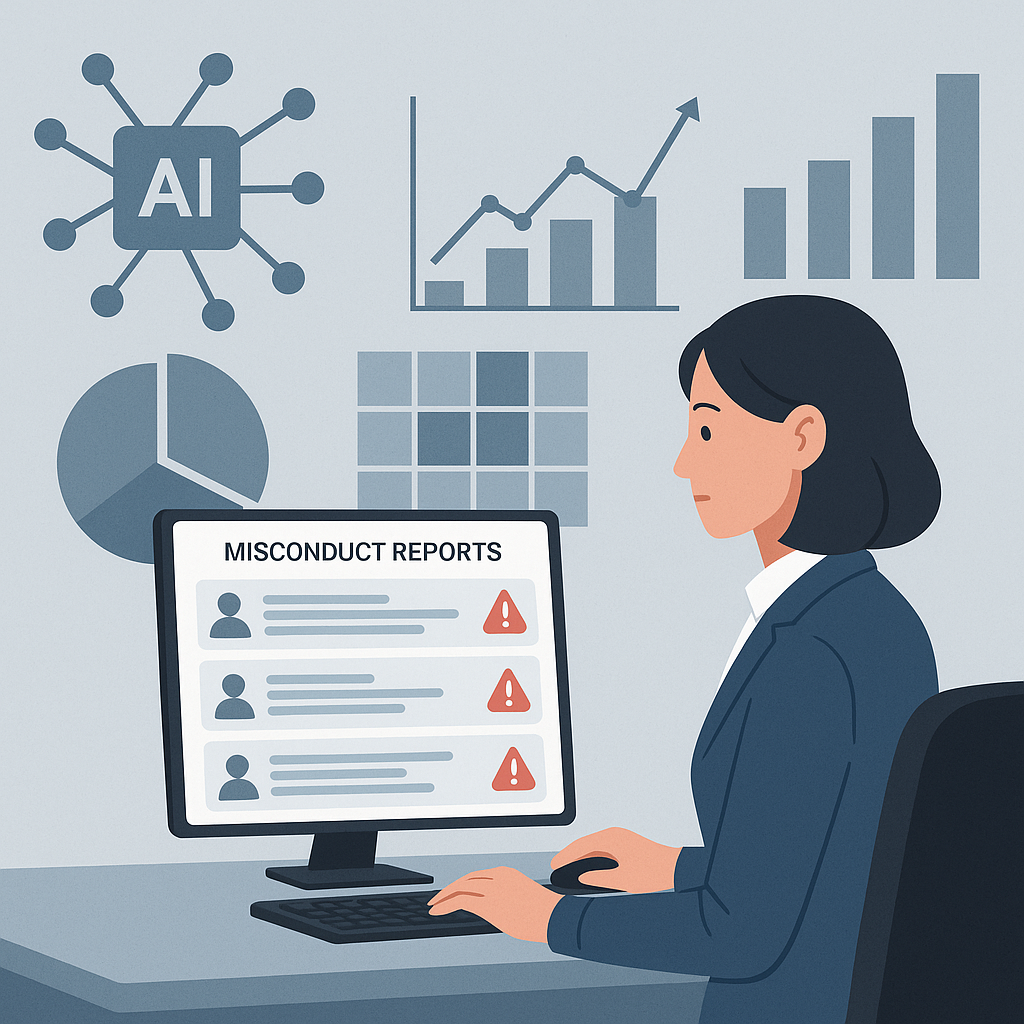
Misconduct reports are surging. According to a 2023 SHRM survey, 42% of HR professionals reported a significant increase in workplace misconduct complaints over the past two years. This isn’t just about sheer numbers. The cases themselves are becoming more complex, often involving multiple complaints, anonymous tips, or issues that require cross-departmental investigation.
Why now? Post-pandemic, companies are navigating remote work environments, shifting employee dynamics, and heightened expectations around accountability. Employees are more aware of their rights, and digital platforms make it easier to report issues anonymously. This is good news for accountability—but bad news for HR teams already struggling with limited resources.
Let’s dive deeper into what’s behind this surge, the flaws in traditional investigation methods, and how AI can transform how HR teams handle misconduct cases.
Why Misconduct Reports Are Increasing
The increase in misconduct reports can be attributed to a combination of societal, technological, and organizational factors. While the SHRM survey highlights the sharp rise in reports, let’s explore the driving forces behind this trend more concretely:
-
Remote Work Challenges: Remote work blurs the boundaries between professional and personal behavior. Miscommunications, unprofessional language in written chats, and inappropriate use of company platforms are more common in remote setups. For example, Slack messages that might seem innocuous in context can sometimes escalate into full-blown harassment allegations when viewed in isolation.
-
Heightened Awareness of Employee Rights: Movements like #MeToo and increased media coverage of workplace misconduct have empowered employees to speak up. A 2022 report from the Equal Employment Opportunity Commission (EEOC) found that sexual harassment claims increased by 13% compared to pre-pandemic levels.
-
Anonymous Reporting Tools: Platforms like AllVoices and Ethena have made it easier for employees to report issues without fear of retaliation. While these tools empower employees, they also lead to more reports, many of which are complex and require significant time to investigate.
The Problem with Traditional Investigations
Let’s be real: manual investigations are a nightmare. They’re slow, subjective, and prone to human error. If you’ve ever sifted through dozens of emails, Slack messages, and meeting notes while trying to piece together what happened, you know how exhausting and time-consuming this can be. Not to mention, it leaves room for inconsistencies—something no HR professional can afford when handling a sensitive case.
Actionable Steps to Address the Challenges:
-
Implement Clear Reporting Guidelines: Ensure employees know how and where to report misconduct. Use tools like employee handbooks, onboarding sessions, and company-wide emails to communicate these processes.
-
Centralize Data Collection: Avoid scattering evidence across multiple platforms. Use a centralized repository for collecting and storing emails, chat logs, and other relevant documents.
-
Train Investigators: Many HR professionals lack formal investigation training. Providing workshops on evidence collection and interview techniques can significantly reduce errors.
Real-World Example:
Consider a mid-sized tech company that relied on manual processes for investigations. When a harassment complaint arose, the HR team had to manually review six months’ worth of Slack messages. The investigation stretched to over 45 days, resulting in employee frustration and a damaged organizational reputation. This could have been avoided with better tools and processes.
How AI Can Simplify Investigations
Here’s where AI steps in. Tools like TalentNext’s AI-powered platform aren’t just for recruitment—they can also be adapted to streamline workplace investigations. One feature that stands out? Bulk data analysis. Let me explain.
Case Study: AI in Action
Imagine you’re investigating a harassment claim. You’ve got chat logs spanning six months, performance reviews from four different managers, and an anonymous complaint email. With traditional methods, you’d need to sift through all this data manually, looking for patterns, inconsistencies, or corroborative evidence. This could take days—or longer.
With AI, you can upload all these documents into a single platform. The system scans for keywords, tone, and context, flagging anything that aligns with the type of behavior you’re investigating. It can even score the relevance of each piece of evidence, so you know where to focus your attention first. What used to take days can now be done in hours.
Actionable Benefits of AI:
- Faster Evidence Analysis: AI tools can process hundreds of documents or messages in minutes, identifying relevant patterns.
- Reduced Bias: Algorithms can standardize the review process, reducing the risk of subjective judgment.
- Real-Time Alerts: Some platforms provide instant notifications when high-risk behavior is detected, allowing teams to act swiftly.
Real-Time Insights for Faster Decisions
AI doesn’t just speed up the process; it also makes it smarter. Advanced algorithms can identify trends and anomalies that might not be obvious to a human investigator. For instance, let’s say a flagged chat log shows a pattern of passive-aggressive comments from a team lead. AI can cross-reference this with performance reviews or exit interviews from other team members. If a pattern of complaints emerges, you’ve got a stronger case to act on.
Comparison Table: Traditional Investigations vs. AI-Powered Investigations
| Aspect | Traditional Investigations | AI-Powered Investigations |
|---|---|---|
| Time Required | Weeks to Months | Hours to Days |
| Accuracy | Prone to Human Error | High Accuracy with Algorithms |
| Data Volume Handling | Limited | Scalable |
| Bias Risk | High (Subjective Judgment) | Reduced with Standardization |
| Cost | High (Labor-Intensive) | Lower Long-Term Costs |
Addressing Common Concerns About AI in HR
You might be thinking, “Can AI really handle something as sensitive as a misconduct investigation?” It’s a fair question. After all, AI isn’t perfect, and it’s not a substitute for human judgment. But when used correctly, it’s a powerful assistant.
FAQs About AI in HR Investigations
-
Can AI replace human investigators?
No. AI is a tool that aids investigators by processing data faster and identifying patterns. Final decisions should always involve human oversight to ensure fairness and context. -
Is employee privacy at risk?
Transparency is key. Let employees know what data is being analyzed and why. Use clear policies to protect sensitive information. -
How expensive are AI tools?
While there is an upfront cost, the efficiency and time savings often lead to long-term cost reductions. -
What if the AI makes a mistake?
AI is not perfect, but it significantly reduces the likelihood of errors by standardizing processes. Regular audits of AI systems can ensure they remain reliable. -
Are small companies able to adopt AI?
Yes. Many AI platforms offer scalable solutions tailored to the needs and budgets of smaller organizations.
What’s Next for Misconduct Investigations?
The spike in misconduct reports isn’t a temporary trend. As workplace dynamics continue to evolve, HR teams need tools that can keep up. AI is one of those tools—not a magical fix, but a practical solution to a growing problem.
Next Steps for HR Teams:
- Audit Your Current Processes: Identify bottlenecks in your current investigation workflows.
- Explore AI Solutions: Research platforms like TalentNext or alternative AI tools to see what fits your organization.
- Invest in Training: Ensure your HR team understands how to use new tools effectively.
If you’re still relying on manual methods, it’s time to rethink your approach. The cost of doing nothing is too high: prolonged investigations, lost employee trust, and the risk of legal repercussions.
Ready to Simplify Your Investigations?
If handling misconduct reports is eating up your team’s time, TalentNext can help. With AI-powered tools for data analysis and case management, we make investigations faster and more effective. Get started free →