The EEOC Pregnancy Rule: A Compliance Nightmare
Navigating EEOC regulations can feel like walking through a legal minefield, especially when it comes to pregnancy accommodations. The Pregnant Workers Fairness Act (PWFA) mandates that employers provide reasonable accommodations for pregnancy, childbirth, and related conditions—including IVF treatments. On paper, this sounds straightforward. In practice? It’s riddled with complexity.
Why? Bias creeps into recruitment processes in ways you don’t even realize. A candidate might be flagged as "less available" or "high risk" simply because they disclose pregnancy or IVF treatments during interviews. Worse still, manual resume screening often deprioritizes candidates who list gaps in employment due to maternity leave. That’s not just unfair—it’s a compliance red flag.
Why Bias Is Hard to Spot
Bias in recruitment is often subtle, making it hard to detect, much less eliminate. Take this common scenario: A recruiter looks at two candidates for a leadership role:
- Candidate A: 10 years of experience, including a six-month gap for maternity leave.
- Candidate B: 9 years of experience, no employment gaps, but weaker leadership skills.
Without realizing it, the recruiter might subconsciously favor Candidate B, thinking Candidate A’s maternity gap signals "unreliability." That’s how bias gets baked into hiring decisions. And under the PWFA, discriminating against candidates for pregnancy-related reasons can result in steep penalties.
Where AI Steps In
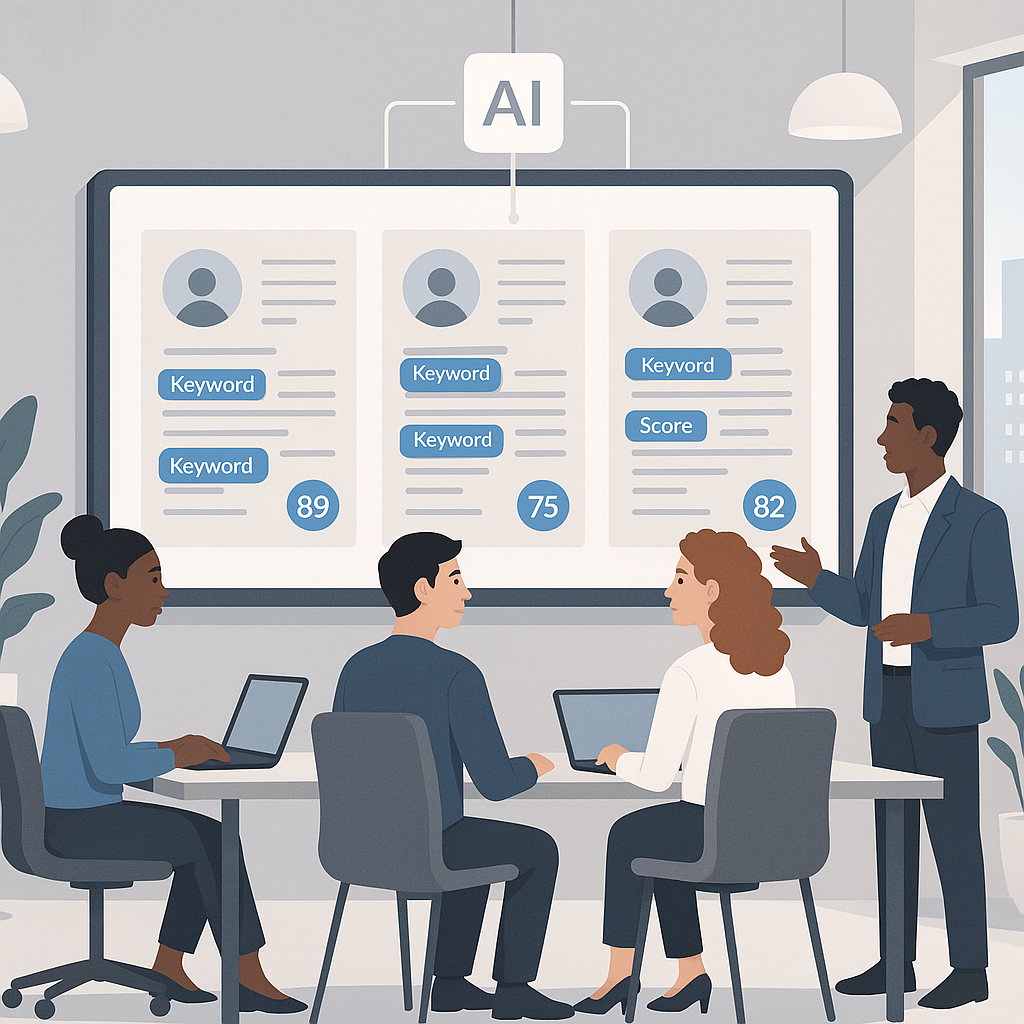
This is where AI-powered tools like TalentNext become indispensable. Let’s zero in on one specific feature: AI resume scoring against job descriptions. Used correctly, this technology reduces human bias that often infiltrates recruitment.
Unlike humans, AI doesn’t care if someone took maternity leave or mentioned IVF treatments in their application. It evaluates resumes purely based on skills, experience, and alignment with the job description. No assumptions. No stereotypes.
For example, if a job requires advanced project management skills and certifications like PMP, TalentNext’s algorithm focuses on those credentials. It disregards irrelevant factors, such as employment gaps or personal disclosures. This not only ensures compliance with EEOC rules but also creates a more equitable hiring process.
Case Study: Bias Reduction in Action
Imagine you’re recruiting for a senior software engineer role. Two candidates submit applications:
- Candidate A: 8 years of experience, including a one-year gap for maternity leave. Holds advanced certifications in cloud computing and software architecture.
- Candidate B: 7 years of experience, no gaps, but lacks certifications.
Under manual screening, Candidate B might seem more "stable" and get prioritized. But AI sees the bigger picture. TalentNext scores both candidates objectively, weighing their skills and certifications against the job requirements. Candidate A might rank higher due to their stronger technical qualifications, regardless of the maternity gap. This is bias prevention in action.
Addressing IVF Protections
The PWFA also requires employers to provide reasonable accommodations for candidates undergoing fertility treatments like IVF. But this can be tricky terrain for recruiters. How do you address accommodation requests without crossing into discrimination?
AI tools like TalentNext simplify this. The platform uses candidate scorecards that focus solely on job-fit metrics. For instance, if a candidate mentions needing flexible hours for IVF appointments, the AI scoring won’t penalize them. Instead, it evaluates their skills and experience exclusively.
This doesn’t mean you ignore accommodation discussions—it’s about separating job-fit evaluation from personal disclosures. AI ensures fairness while leaving room for human recruiters to address accommodations appropriately.
Real-World Example: Accommodation Scenarios
Let’s say a candidate for a marketing manager role discloses during an interview that they’ll need periodic time off for IVF treatments. Here’s how AI can help:
- Neutral Scoring: The system evaluates the candidate based on their expertise in digital marketing, campaign management, and analytics—not their need for accommodations.
- Objective Metrics: The recruiter receives a scorecard showing how well the candidate aligns with the job requirements. This prevents unconscious bias.
- Human Follow-Up: Armed with objective data, the recruiter can discuss accommodations openly without prejudice.
The Pushback: Is AI Perfect?
Of course, no technology is flawless. AI algorithms are only as good as the data they’re trained on. If the underlying data contains bias, the AI could inadvertently reinforce it.
That’s why tools like TalentNext continuously refine their models. They incorporate user feedback, audit for bias, and update algorithms to align with EEOC standards. For recruiters, the takeaway is clear: don’t rely on AI blindly. Use it alongside human oversight for the best results.
Why Manual Screening Falls Short
Before you dismiss AI as overhyped, consider the alternative: manual screening. It’s slow, inconsistent, and prone to error. Even the most experienced recruiter can unintentionally deprioritize a resume because of unconscious bias. And when EEOC penalties are in play, mistakes can be costly.
AI accelerates the process, prioritizes candidates based on objective criteria, and alerts recruiters to resumes that warrant closer attention. This frees up time for meaningful engagement while reducing compliance risks.
Comparison Table: Manual Screening vs. AI Screening
| Feature | Manual Screening | AI Screening |
|---|---|---|
| Speed | Slow, time-intensive | Fast, automated |
| Consistency | Varies by recruiter | Uniform scoring |
| Bias Reduction | High risk of unconscious bias | Designed to reduce bias |
| Compliance | Prone to errors | EEOC-aligned algorithms |
| Scalability | Limited | Easily scalable for high volumes |
Final Thoughts
EEOC pregnancy rule compliance doesn’t have to be overwhelming. AI tools like TalentNext simplify the process, reducing bias and focusing on skills and experience. This isn’t just about avoiding penalties—it’s about creating a fairer, more equitable hiring process.
If you’re tired of compliance headaches, TalentNext can help. Get started free →