How AI Enhances the Recruitment Process
I used to think AI in recruitment was overhyped. Sure, it sounded cool: "AI will save recruiters hours! AI will predict the best candidate!" But I believed hiring was too nuanced for machines. What about gut instinct? What about reading between the lines when you talk to someone? Machines couldn’t do that. I figured AI was just fancy automation — good for sorting resumes but useless for the human stuff.
I wasn’t alone in thinking this. A 2023 Gartner survey found that only 17% of HR leaders felt very confident in leveraging AI for decision-making. It was easy to dismiss AI as a buzzword, especially when so many tools seemed to promise the moon and deliver frustration.
The Shift: Understanding the Potential of AI
Then, I started to explore how AI could actually work in recruitment. One of the most time-consuming tasks in hiring is resume screening. Recruiters often spend hours going through resumes, manually checking for qualifications, keywords, and relevant experience. This process can be repetitive and prone to human error or bias.
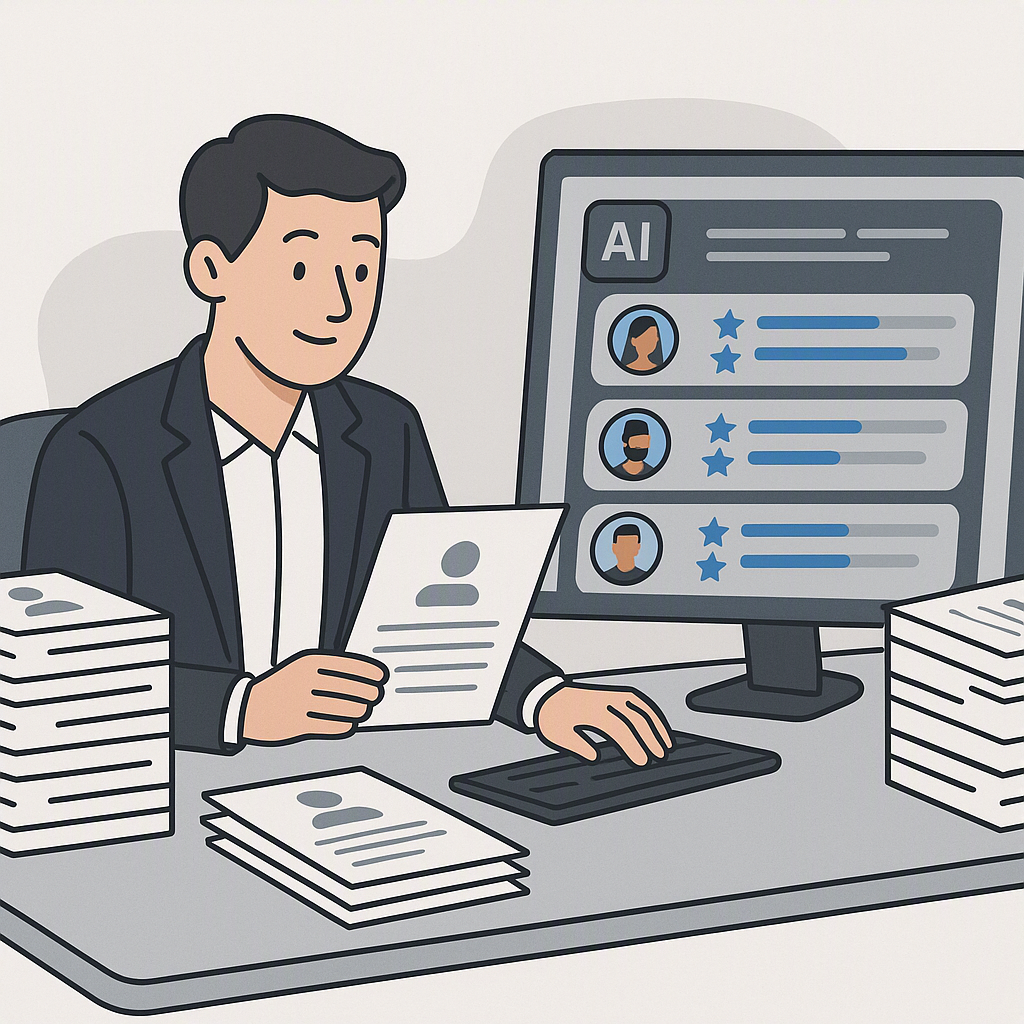
AI-powered tools can automate this process by analyzing resumes in bulk and identifying candidates who match the job requirements. The process typically involves the following steps:
How AI Automates Resume Screening
-
Uploading the Job Description: The recruiter uploads a detailed job description into the AI tool. This step is critical because the quality of the input determines how well the AI matches candidates to the role.
- Actionable Tip: Use precise language in your job descriptions and clearly define required vs. preferred qualifications.
-
Bulk Uploading Resumes: Resumes are imported into the system, either from job application portals or via manual uploads. The AI then organizes and standardizes the data for analysis.
-
Analyzing Candidate Profiles: The AI evaluates resumes based on predefined criteria, such as skills, experience, and qualifications. This includes scanning for keywords, relevant job history, and educational background.
-
Generating a Ranked List: Once the analysis is complete, the system provides a ranked shortlist of candidates who best match the role. This allows recruiters to focus their time and energy on top contenders.
- Actionable Tip: Regularly audit and update the criteria the AI uses to ensure alignment with current company needs and diversity goals.
This approach allows recruiters to focus on evaluating the most promising candidates, rather than sifting through hundreds of applications manually. While the exact time savings will vary depending on the volume of applications, the efficiency gains are significant. In particular, it reduces the likelihood of overlooking qualified candidates due to recruiter fatigue or unconscious bias.
Why I Held Onto My Old Belief
Looking back, I know why I resisted AI in recruitment for so long. First, there’s the fear of losing control. AI felt like outsourcing judgment, and judgment is the heart of hiring. If I couldn’t trust my own instincts, what was the point of being a recruiter?
Second, there’s the skepticism about tech promises. I’ve seen tools that overpromise and underdeliver. Some require so much setup they’re more trouble than they’re worth. Others produce results that don’t make sense — "top matches" who clearly aren’t qualified. It’s easy to assume all AI tools are like that.
Finally, I think there’s a cultural bias. Recruitment is a people-driven field, and we pride ourselves on understanding people. AI felt cold and clinical, like it could never grasp the human side of hiring.
What I Do Differently Now
These days, I use AI as a tool to enhance my recruitment process, not as a replacement for human judgment. For roles with high application volume, I rely on AI tools to handle the initial screening. By automating this step, I can quickly identify a shortlist of candidates who meet the basic qualifications and focus on evaluating them more deeply.
Practical Steps for Integrating AI
-
Start Small: Test AI tools with straightforward use cases, such as resume screening or job description optimization. This reduces the learning curve and ensures you’re solving real pain points.
-
Pair AI with Human Oversight: AI isn’t perfect. For example, it might rank candidates based on keywords but miss out on context. Always review AI-generated results with a human lens.
-
Continuously Evaluate Tools: Not all AI platforms are created equal. Measure their effectiveness using metrics like time saved, quality of shortlisted candidates, and user satisfaction.
-
Train Your Team: Ensure recruiters understand how to use AI tools effectively and ethically. This includes recognizing potential biases in AI outputs and mitigating their impact.
Once I have my shortlist, I dive into the human aspects of recruitment. I review resumes to assess cultural fit, career trajectory, and other intangible qualities that AI might not capture. This combination of automation and human insight allows me to make more informed hiring decisions.
AI can also assist in crafting better job descriptions. Some tools analyze job postings and suggest improvements to make them more appealing and clear. While these suggestions are not always perfect, they provide a helpful starting point for creating job descriptions that attract the right candidates.
Balancing AI and Human Judgment
While AI offers many benefits, it’s not without its challenges. For instance, there’s the concern that AI might overly rely on keywords, potentially overlooking candidates who bring unique, out-of-the-box skills. Additionally, while AI can help reduce certain types of bias, it’s not immune to the biases present in the data it’s trained on. These are important considerations for any recruiter using AI tools.
Decision Framework: When to Use AI in Recruitment
| Recruitment Task | AI Recommended? | Human Oversight Needed? |
|---|---|---|
| Resume Screening | Yes | Yes |
| Job Description Optimization | Yes | Yes |
| Candidate Interviewing | No | Yes |
| Assessing Cultural Fit | No | Yes |
| Scheduling Interviews | Yes | No |
The key is to use AI as a complement to human expertise. By automating repetitive tasks, AI frees up recruiters to focus on building relationships and making nuanced decisions — areas where human judgment is irreplaceable.
Conclusion
AI has the potential to transform recruitment by streamlining processes and enhancing decision-making. While it’s not a magic solution, it can be a powerful tool when used thoughtfully. By combining the efficiency of AI with the empathy and insight of human recruiters, organizations can create a more effective and equitable hiring process.
If you’re considering integrating AI into your recruitment strategy, start small. Test tools that address specific pain points, like resume screening or job description optimization. Evaluate their effectiveness and make adjustments as needed. With the right approach, AI can be a valuable ally in finding the best talent for your organization.