AI Hiring Bias: A Problem We Can't Ignore
You’ve heard it before: AI can save recruiters time by automating resume screening. But here’s the flip side—AI isn’t perfect. If it's trained on biased data, it can amplify discrimination instead of reducing it.
Take this example: A study by the National Bureau of Economic Research found resumes with "ethnic-sounding" names received 50% fewer callbacks than identical resumes with "traditional" names. That’s a manual hiring bias. When AI tools are trained on such biased hiring histories, they tend to replicate these patterns at scale.
Think about it: If you feed an AI system years of biased decision-making, it learns to think the same way. So, how do we fix this? By recognizing where bias creeps in and taking real steps to stop it.
How Bias Creeps Into AI Hiring Tools
AI doesn’t have opinions. But it does have data. And if that data is flawed or skewed, the AI will make decisions based on those same flawed patterns. Let’s break down how bias gets embedded into AI hiring tools:
1. Historical Hiring Data
If your company has been favoring certain schools, genders, or ethnic backgrounds, that bias gets baked into the training data. The AI assumes those preferences are "good" because they’re frequent. For example, if a company historically hired more men than women for technical roles, the AI might prioritize male candidates simply because the data suggests that’s what the company historically valued.
2. Over-reliance on Keywords
An AI might prioritize resumes with keywords like "MBA" or specific job titles. While efficient, it risks ignoring candidates who don’t use the exact phrasing but still have the right skills. For example, a candidate might have "project management" skills but not explicitly list the exact term, leading to their exclusion despite their qualifications.
3. Unconscious Bias in Job Descriptions
Phrases like "rockstar developer" or "ninja coder" might unintentionally attract more male candidates, perpetuating a gender imbalance in applications. Similarly, words like "competitive" or "aggressive" can subtly discourage women or candidates from certain cultural backgrounds from applying.
4. Unvetted Algorithms
Not all AI tools are created equal. Some lack the necessary checks and balances to identify and mitigate bias. For instance, a poorly designed algorithm might weigh certain attributes (like years of experience) too heavily, penalizing candidates from underrepresented groups who may have faced systemic barriers to career advancement.
5. Limited Input Data
If the training data isn’t representative of the broader candidate pool, the AI will fail to generalize its decision-making. For example, if most of the training data comes from resumes of candidates in one geographic region or industry, the AI may struggle to evaluate candidates from other areas or sectors.
5 Proven Ways to Prevent AI Hiring Bias
So, what can you do to ensure your hiring process is fair? These five steps work. And no, the answer isn’t to ditch AI altogether. It’s about using it responsibly.
1. Start with Diverse Training Data
An AI system is only as good as the data it’s trained on. Make sure your training data includes diverse candidates—different genders, ethnicities, educational backgrounds, and career paths. This helps the AI recognize a broader range of what "qualified" looks like. For example:
- If training data includes resumes from women who re-entered the workforce after a career gap, the AI learns to evaluate such candidates more fairly.
- Include resumes from candidates across various industries to prevent the AI from overfitting to a specific sector.
2. Use Tools That Anonymize Data
One way to reduce bias is by removing identifying information like names, addresses, and photos from resumes. This allows candidates to be judged purely on their skills and experience—not their demographics. Tools like TalentNext anonymize resumes during the initial screening, ensuring a more objective evaluation process. For example:
- Instead of seeing "John Smith, 123 Main Street," recruiters see "Candidate A."
- The AI focuses on qualifications like certifications, years of relevant experience, and skills rather than demographic indicators.
3. Audit Your AI Regularly
Don’t assume your AI is always doing a great job. Run tests to identify patterns in its decisions. Are certain groups being disproportionately excluded? Adjust the algorithm or its training data as needed. For example:
- Periodically review hiring metrics to see if certain demographics are underrepresented in AI-recommended candidates.
- Test the algorithm using synthetic resumes that represent diverse backgrounds to check for biased outputs.
4. Standardize Scoring Criteria
Create a scoring rubric that prioritizes skills and experience over subjective factors. AI-powered tools like TalentNext use scorecards to rank candidates against job descriptions, which helps standardize evaluations. But remember, even these systems need human oversight. For example:
- Define clear, measurable criteria for evaluating candidates, such as "proficiency in programming languages" or "number of completed projects."
- Avoid vague criteria like "cultural fit," which can introduce bias.
5. Train Your Team on Bias Awareness
AI can’t fix everything. Recruiters still need to be aware of their own biases and how they might influence hiring decisions. Regular training sessions can help your team recognize and counteract these tendencies. For example:
- Train hiring managers to recognize biased language in job descriptions.
- Conduct workshops on how bias can influence resume reviews and interviews.
Why Human Oversight Still Matters
Here’s the thing: AI is a tool, not a magic wand. It can make your hiring process faster and more consistent, but it’s not perfect. That’s why human oversight is critical.
For example, AI might flag a candidate as a poor match because they lack a specific keyword. But a recruiter might notice that their experience aligns in other ways. Without human intervention, that candidate could be wrongly dismissed.
A good AI tool doesn’t just automate—it supports better decision-making. TalentNext’s platform is designed to work alongside recruiters by providing data-driven insights without replacing human judgment.
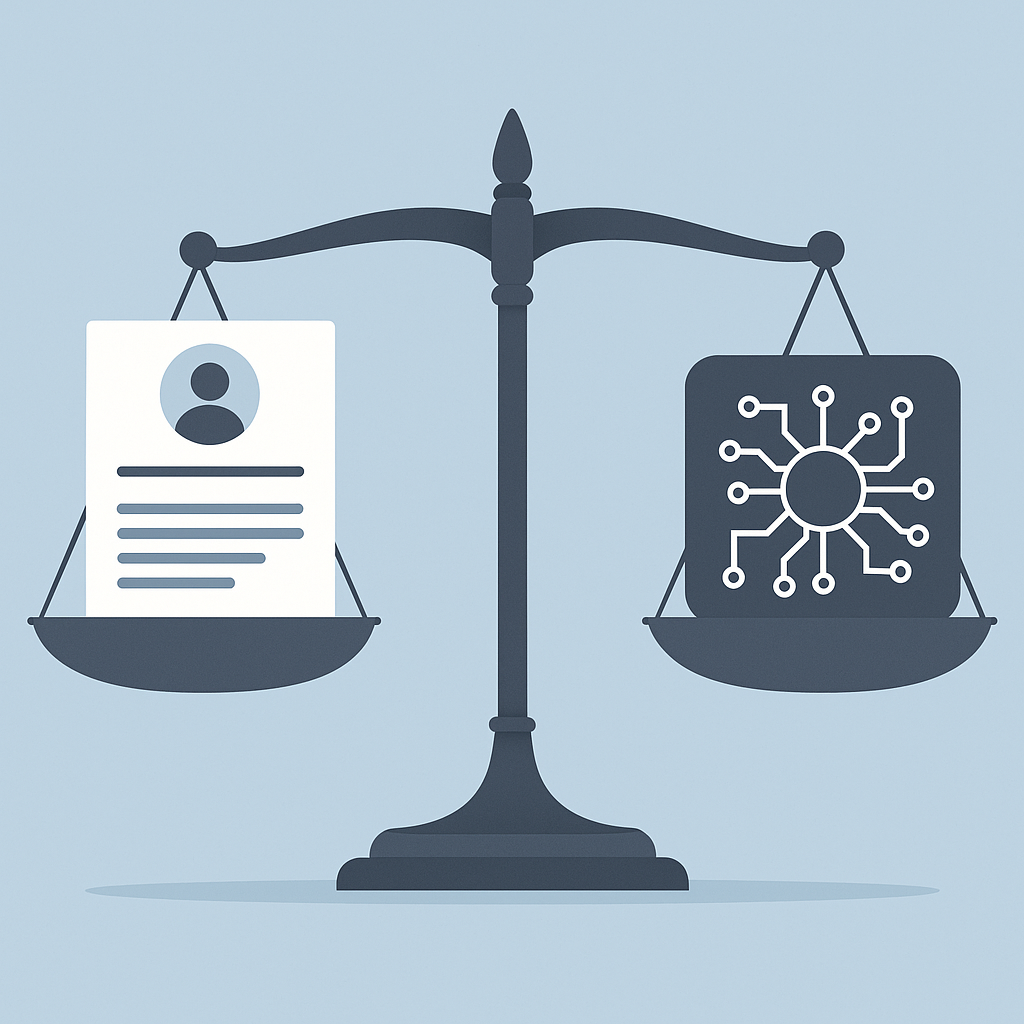
Comparison Table: Human-Driven vs. AI-Driven Hiring
| Aspect | Human-Driven Hiring | AI-Driven Hiring |
|---|---|---|
| Speed | Slower, manual screening takes time | Faster, processes hundreds of resumes quickly |
| Consistency | Prone to human bias, subjective judgment | Consistent application of predefined criteria |
| Bias | Unconscious bias can creep in | Risks amplifying bias if data is flawed |
| Scalability | Limited by human capacity | Highly scalable, handles large candidate pools |
| Flexibility | Can adapt to nuanced candidate profiles | Rigid, may overlook unconventional candidates |
| Oversight Needed | Moderate | High—requires regular audits and human review |
Final Thoughts
AI hiring tools are powerful, but they’re not foolproof. Bias can and does happen—but it’s preventable. Start with diverse data, anonymize applications, and audit your tools regularly. And don’t forget: human oversight is essential.
If you’re dealing with resume screening challenges, TalentNext can help. Get started free →