Inclusion Starts at the Top — But It Doesn’t End There
Let’s get one thing straight: inclusion isn’t just HR’s job. If leadership doesn’t prioritize it, no amount of policies or programs will fix the problem. Companies that treat inclusion as an afterthought may struggle to attract top talent and meet evolving expectations.
The question is: how do you bake inclusion into your hiring process without overloading your team? That’s where AI tools come in. But before you roll out any tech, you need leadership buy-in. Because if your hiring managers aren’t aligned, even the best AI won’t save you.
Why Top-Down Commitment Matters
Here’s an uncomfortable truth: bias exists everywhere — in job descriptions, in resume screening, and even in AI algorithms. Without a clear directive from leadership, it’s easy for hiring teams to default to “business as usual.” That’s how bias creeps in.
Leadership involvement can drive meaningful change by setting clear priorities, implementing training programs, and leveraging tools that help identify and mitigate bias in hiring processes. For example, AI-powered tools can flag candidates from diverse backgrounds who meet job criteria but might otherwise be overlooked due to traditional biases.
Can AI Really Reduce Bias?
AI isn’t perfect. If it’s trained on biased data, it’ll produce biased results. But well-designed tools can actively counter this risk. For instance, some AI tools allow recruiters to customize scoring criteria to reduce reliance on subjective factors like education pedigree or gendered language. It’s not just about speeding up resume screening — it’s about making smarter, fairer decisions.
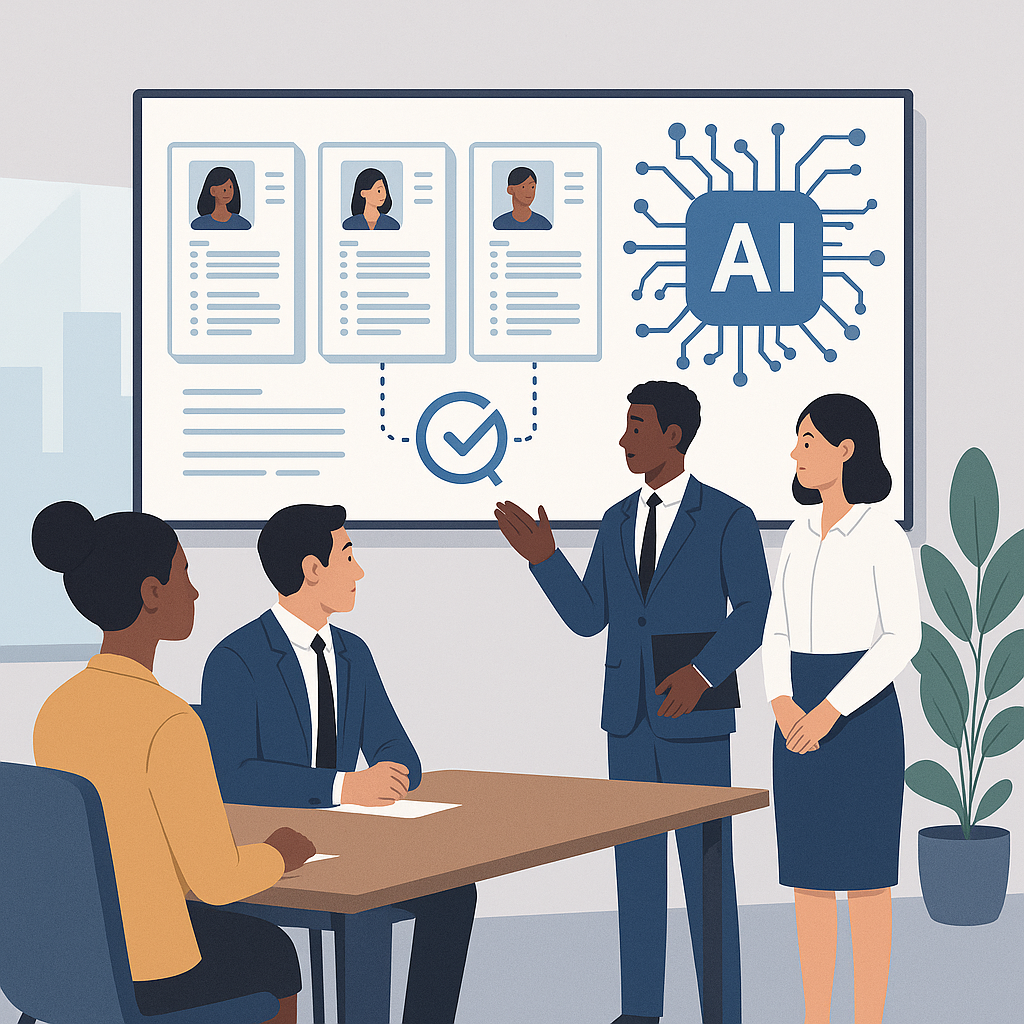
Illustrative example — An AI tool might analyze resumes against job descriptions while flagging potential biases. For instance, it could identify overly narrow job criteria (e.g., "requires a degree from a specific university") and suggest alternatives (e.g., "relevant certifications or equivalent experience"). Recruiters still have the final say, but the tool helps ensure qualified candidates aren’t overlooked.
The Obvious Objections
You might be skeptical. “AI can’t understand soft skills or cultural fit. What if it misses great candidates?” Fair points. AI isn’t perfect — and it shouldn’t replace human judgment. Instead, think of it as your co-pilot. It narrows the pool so you’re not drowning in resumes. From there, it’s up to you to engage with the best candidates.
Another concern: “Won’t AI just reinforce biases?” That depends on how it’s implemented. Ethical AI practices, such as continuous auditing of algorithms, can help mitigate this risk. But recruiters need to stay involved. Blind trust in any tool — AI or otherwise — is a mistake.
Practical Steps for 2026 Inclusion Goals
If you want to build a truly inclusive workplace, you’ll need both top-down leadership and smart tools. Here’s how:
- Set Clear Targets: Whether it’s diversity metrics or inclusion training completion rates, make inclusion a measurable priority.
- Invest in Training: Train hiring managers to spot and counter their own biases. Include real-world scenarios they’re likely to encounter.
- Leverage AI Thoughtfully: Use tools to streamline resume screening and reduce bias. But don’t make them the sole decision-maker.
- Audit Your Process: Regularly review your hiring data. Are you attracting diverse candidates? Are your shortlists inclusive? If not, adjust your approach.
- Communicate Openly: Inclusion isn’t a one-and-done initiative. Share progress with your team to keep everyone accountable.
Common Mistakes to Avoid
Mistake #1: Assuming AI will fix everything. Tools are powerful, but they’re not foolproof. Always pair AI with human oversight.
Mistake #2: Forgetting to review job descriptions. Biased language starts here. Use tools (or even a fresh set of eyes) to spot problematic phrasing.
Mistake #3: Ignoring feedback. If candidates say your process feels exclusionary, listen. Small tweaks can make a big difference.
Mistake #4: Skipping leadership alignment. If your CEO isn’t onboard, good luck convincing the rest of the team. Inclusion starts with them.
Call to Action
If you’re serious about building an inclusive workplace, AI tools can help. From reducing bias to saving time, they’re a practical way to improve your hiring process.