Why Inconsistent Screening Leads to Bad Hires
Let’s face it: bad hires happen. And they’re expensive. The U.S. Department of Labor estimates that a bad hire can cost up to 30% of that employee’s annual salary. But the real cost? Lost time, frustrated teams, and delayed projects.
Here’s the kicker: most bad hires aren’t because candidates lied on their resumes. They happen because screening processes are inconsistent. One recruiter focuses on experience. Another prioritizes educational pedigree. A third gets distracted by a typo. Meanwhile, the best candidate? They’re ghosted because their resume didn’t fit a “preferred” format.
Sound familiar?
The Problem With Manual Resume Screening
Manual screening is messy. It’s subjective, time-consuming, and prone to human error. A study by the National Bureau of Economic Research found that resumes with "ethnic-sounding" names received 50% fewer callbacks than identical resumes with "traditional" names. That’s unconscious bias at work—and it’s costing you great candidates.
Real-World Example: Bias Hurts Hiring Quality
A real-world case study published by Harvard Business Review found that companies relying on manual screening often overlooked candidates with non-traditional backgrounds. For instance, one company realized they were rejecting candidates from community colleges despite their superior technical skills simply because the recruiters were biased toward Ivy League degrees. This oversight led to a 15% drop in productivity for the team that hired based on pedigree alone.
The Volume Problem
Then there’s the sheer volume of applications. Most recruiters spend 23 hours screening resumes for a single hire. When you’re buried in applications, it’s easy to miss the key details that actually matter: skills, qualifications, and cultural fit. Instead, you end up making snap judgments based on surface-level factors like formatting or brand-name companies.
Structured Screening: The Antidote to Chaos
If you want to prevent hiring someone without the right skills, you need a structured, skills-based screening process. Here's what that looks like:
1. Define Must-Have Skills Clearly
Work with your hiring manager to identify the non-negotiables for the role. Is team collaboration a must? What about a specific technical certification? Document these.
Actionable Step: Create a checklist of hard and soft skills required for the role. For example, if you’re hiring a marketing manager, your checklist might include "Google Analytics certification," "experience managing budgets over $100,000," and "strong presentation skills." Share this checklist with your team to ensure alignment.
2. Use Standardized Scorecards
Create a rubric for evaluating candidates objectively. For example, give points for years of relevant experience, specific tools used, or measurable achievements. This minimizes bias while keeping everyone aligned.
Example Rubric:
- Relevant job experience: 30 points
- Technical certifications: 20 points
- Cultural fit: 20 points
- Measurable achievements (e.g., increased sales by 20%): 30 points
3. Automate Where It Makes Sense
Tools like TalentNext’s AI-powered resume screening can analyze and score resumes against your job description in seconds. For example, if you’re hiring a software developer, TalentNext can surface candidates with strong Python skills and flag those without relevant coding experience. No more digging through hundreds of resumes manually.
Comparison Table: Manual vs. AI Screening
| Feature | Manual Screening | AI Screening |
|---|---|---|
| Time per 100 resumes | 20+ hours | 10 minutes |
| Bias Reduction | Low | High |
| Consistency | Varies | Standardized |
| Candidate Feedback | Rare | Automated suggestions |
How TalentNext Fixes the Screening Bottleneck
At TalentNext, we’ve seen how broken screening leads to hiring mistakes. That’s why we built an AI-powered platform designed to eliminate inconsistency and bias.
Core Features of TalentNext
-
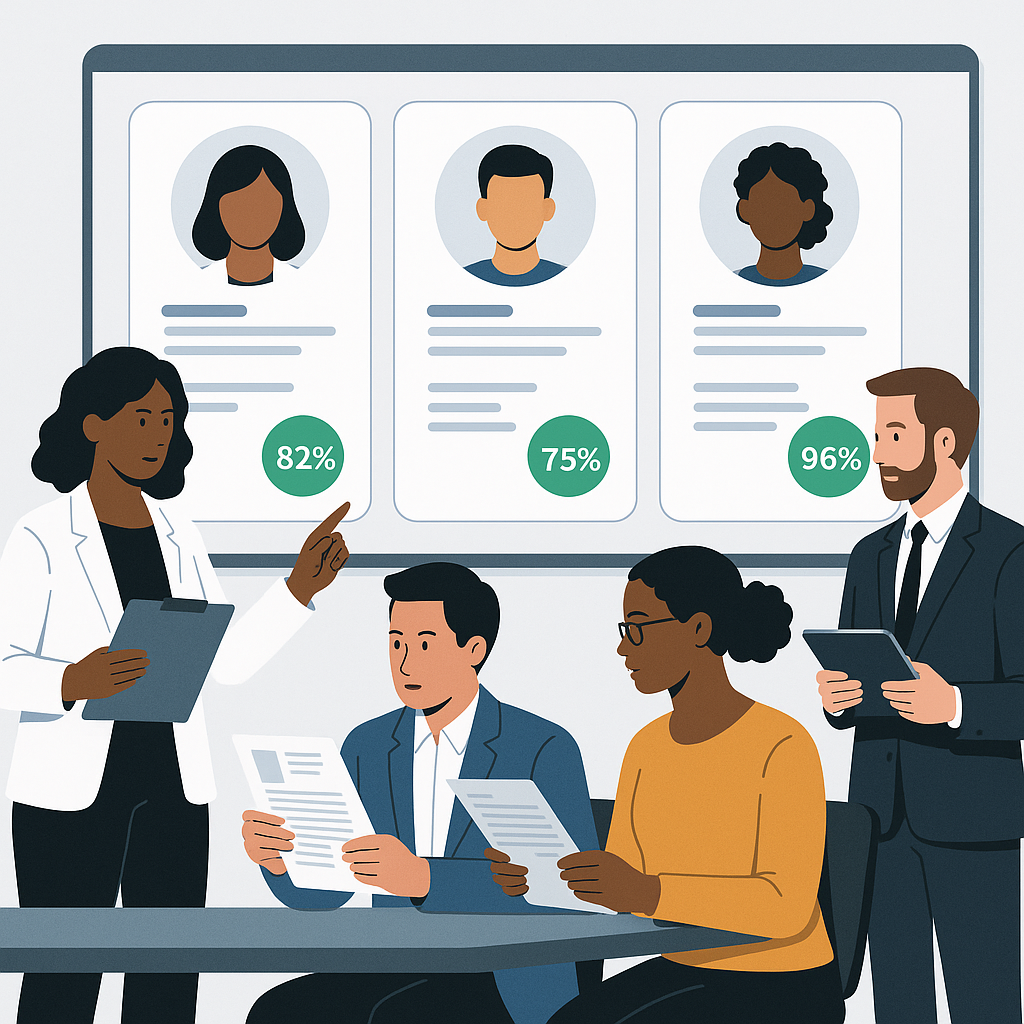
Candidate Scorecards: Each resume gets a match score based on the role’s requirements. For example, a candidate with 5+ years of relevant experience in project management might score 92%, while someone with unrelated experience scores 45%.
-
Bulk Resume Uploads: Got 300 resumes for one role? Upload them all at once. TalentNext will process and rank them in minutes, saving you hours.
-
AI Feedback for Candidates: It’s not just about screening. TalentNext also gives candidates actionable feedback to improve their resumes, so they have a fair shot at their dream job.
Case Study: Streamlining Hiring at TechCo
TechCo, a mid-sized software company, implemented TalentNext for their developer roles. Before using AI, recruiters spent 30 hours screening resumes for each position. After adopting TalentNext, they reduced screening time by 75% and increased their candidate satisfaction rate by 40%, thanks to automated feedback.
The Results: Faster, Fairer Hiring
Recruiters using AI tools like TalentNext report saving up to 75% of their screening time. That means more time for interviews, reference checks, and engaging top-tier candidates. Plus, structured hiring processes reduce bias and help you focus on what really matters: skills and potential.
Common Pushbacks — And Why They’re Wrong
“AI can’t replace human judgment.”
True, but that’s not the point. AI isn’t here to replace you; it’s here to do the heavy lifting. Think of it as a filter that surfaces the best resumes so you can focus on what you do best—hiring the right people.
“What about niche roles? AI can’t handle those.”
Actually, it can. TalentNext’s algorithms are trained to analyze niche skills by breaking down job descriptions into specific, measurable criteria. Need someone with expertise in molecular biology? The AI can prioritize resumes that include relevant research or publications.
“This sounds expensive.”
Not hiring the right person is more expensive. Between turnover costs, lost productivity, and team morale, a single bad hire can set you back tens of thousands of dollars. TalentNext’s time savings alone make it worth the investment.
Final Thoughts
Preventing bad hires isn’t just about avoiding mistakes—it’s about building a stronger team. By combining structured hiring processes with AI-powered tools like TalentNext, you can eliminate guesswork, reduce bias, and focus on what really matters: finding candidates who have the right skills and potential to thrive.
If you’re ready to fix your screening process and hire better, faster, and fairer, get started with TalentNext today →.