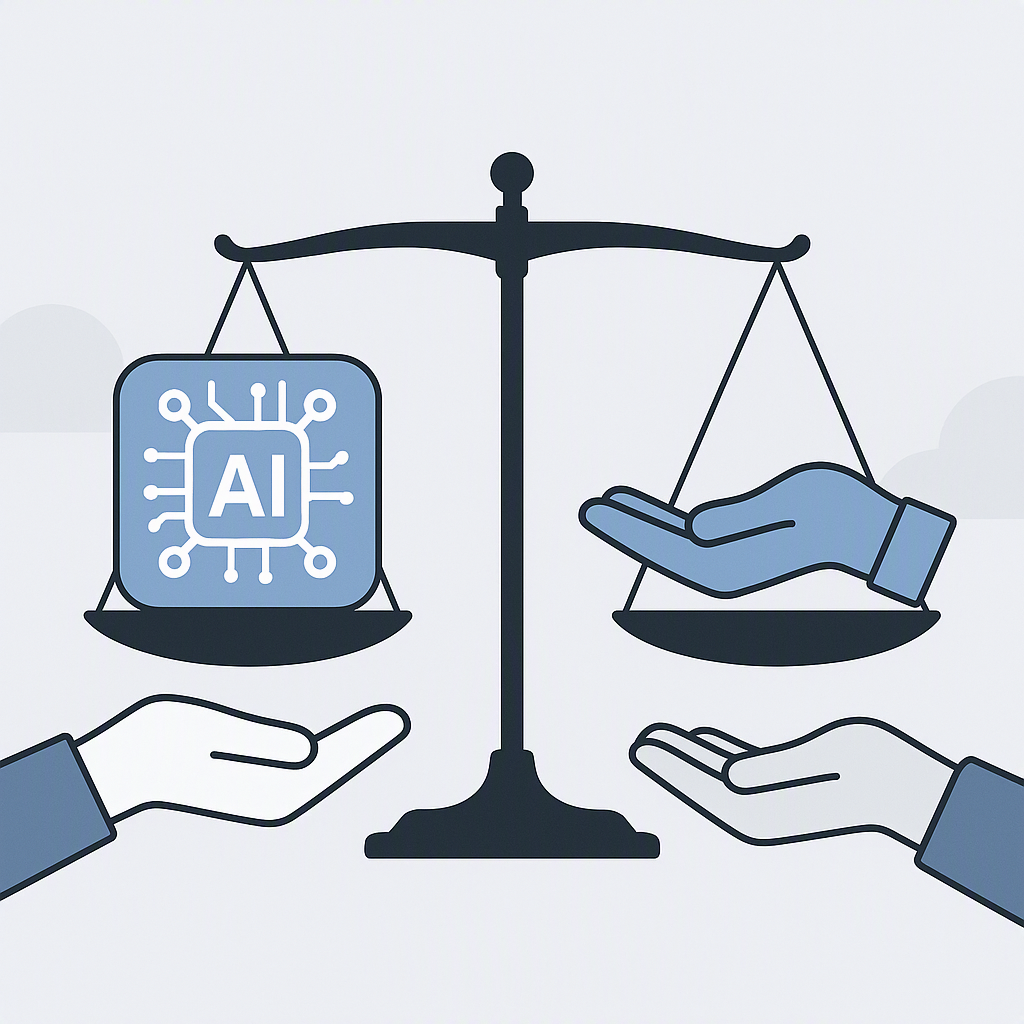
Why I Used to Think Manual Screening Was Better
I used to believe that manually reviewing resumes was the gold standard of recruitment. It just made sense. Each candidate’s application deserved a personal touch. After all, how could software possibly understand the nuances of a well-crafted resume or gauge the potential hidden between the lines?
I’d sit down with a coffee, spread out stacks of resumes, and spend hours combing through them. Keywords mattered, but so did formatting, tone, and "gut feel." I convinced myself I could spot the diamonds in the rough — the candidates who didn’t tick all the boxes but had potential.
It felt thorough, personal, and necessary. But it was also slow. Painfully slow.
On top of that, manual screening is prone to human error. When you’re dealing with hundreds of resumes, fatigue inevitably sets in, and mistakes happen. You might unintentionally prioritize certain formats, overlook promising candidates because of small errors, or rely too much on subjective impressions.
What Made Me Change My Mind
It hit me during a hiring crunch for a major project. We had hundreds of applications pouring in for a dozen open positions. My team and I spent days — literal days — sifting through resumes. By day three, we were exhausted. By day five, we weren’t sharp anymore. We didn’t even trust our own judgments.
Then came the kicker: We missed some great candidates. Top talent slipped through the cracks because we were too focused on the obvious matches or too tired to give every resume the attention it deserved.
This experience highlighted the inefficiencies of manual screening. When you’re trying to juggle multiple roles, tight deadlines, and a mountain of resumes, even the most dedicated recruiter can falter. The process simply isn’t scalable.
That’s when I knew something had to change. We couldn’t keep working like this. We needed help.
Enter AI-Powered Resume Screening
I started researching tools that could help us screen resumes faster. That’s when I found out about TalentNext, an AI-powered screening platform that promised to cut screening time by up to 75%. Honestly, I was skeptical. Could AI really do what we were struggling to do manually?
Turns out, it could. And it didn’t just save us time — it made us better.
Core Benefits of AI Resume Screening
Here’s what makes AI screening such a game-changer:
-
Speed: AI doesn’t need breaks, coffee, or sleep. TalentNext let us upload hundreds of resumes in bulk. Within minutes, it analyzed every single one against the job description and gave us a ranked list of candidates based on match percentage. Imagine turning hours of work into a few clicks.
According to a case study published on Premier Talent Partners, predictive analysis in AI tools like TalentNext has been shown to reduce screening time by up to 75%, allowing recruiters to focus on high-value tasks instead.
-
Contextual Understanding: One of my biggest concerns with AI was that it would miss nuance. But TalentNext surprised me. It doesn’t rely on simple keyword matches. For instance, if a job description requires "leadership skills," the AI doesn’t just look for the word "leadership." It picks up phrases like "managed a team of 10" or "led cross-functional projects." That’s contextual understanding — something manual screening often misses.
-
Consistency: By the 50th resume, human recruiters start slipping. AI doesn’t. It evaluates every resume objectively, based on the same criteria. That means no bias from fatigue or subjective impressions.
-
Scalability: Whether you’re dealing with 50 resumes or 5,000, AI scales seamlessly. It doesn’t matter how many applications you receive; the tool processes them efficiently without sacrificing quality.
-
Bias Reduction: Unlike humans, AI doesn’t judge candidates based on formatting, age, gender, or other irrelevant factors — as long as the algorithms are designed with fairness in mind. This levels the playing field for all applicants. Platforms like TalentNext, which are used in recruitment across Bahrain, India, and GCC countries, have shown promise in reducing bias, according to Vervoe.
Region-Specific Hiring Challenges
Recruiters in Bahrain, India, and GCC countries often face unique hiring challenges. These include large applicant pools, tight deadlines, and the need for diverse hiring practices. AI tools like TalentNext have been widely implemented in these regions to address these issues.
For example, in a hiring campaign for a GCC-based tech company, TalentNext helped screen resumes from over 3,000 applicants. The AI tool identified candidates based on skills and work history, ensuring a better match and reducing manual workload by 60%, as reported by Dice.
Why My Old Belief Stuck Around So Long
To be fair, manual screening wasn’t entirely useless. It let me feel connected to the hiring process. I liked the idea of personally choosing who made it to the interview stage. And I believed I was catching things that software couldn’t — like personality hints or cultural fit.
But here’s the truth: Most resumes don’t reveal personality or fit. They’re just lists of skills, experience, and education. And AI can handle that much better than a tired recruiter with a looming deadline.
What manual screening cost me was time. Time that could’ve been spent engaging with top candidates, building relationships, and improving the hiring strategy. Instead, I was buried under a mountain of paper.
The Hidden Costs of Manual Screening
- Burnout: Spending hours reviewing resumes can lead to fatigue, which affects decision-making and accuracy.
- Missed Opportunities: Great candidates can be overlooked due to human error or subjective biases.
- Limited Capacity: A human recruiter can only process a finite number of resumes, limiting scalability for high-volume hiring.
How AI Changed My Process
Now, we use AI as our first line of defense. Tools like TalentNext handle the grunt work — screening hundreds of resumes, ranking them, and flagging the strongest matches.
Step-by-Step Integration of AI
Here’s how we’ve integrated AI into our workflow:
-
Bulk Uploads: We upload all incoming resumes to TalentNext. The platform scores each resume based on job-fit percentage. This eliminates the need to manually sift through every application.
-
Shortlisting: We focus on candidates with the highest match scores. If someone scores 85% or above, they’re almost always worth a closer look. This prioritization allows us to concentrate on quality rather than quantity.
-
Human Review: We still review resumes, but only the ones already flagged as promising by the AI. This saves us hours and ensures we’re spending time on the right candidates.
-
Feedback for Candidates: TalentNext offers candidates AI-driven resume feedback. This helps them tailor their applications for better matches, reducing generic submissions and improving quality overall.
-
Continuous Improvement: We use data from TalentNext to refine our job descriptions and screening criteria, ensuring better matches with each hiring cycle.
AI Isn’t Perfect (And That’s Okay)
Does AI solve everything? No. It’s not great at spotting personality traits or assessing cultural fit — yet. Those are still human jobs. And sometimes, even the best algorithms miss a hidden gem. That’s why I don’t rely on AI entirely; I use it as a tool, not a replacement.
But as a recruiter, my time is better spent on people, not paper. AI lets me focus on interviews, relationship-building, and strategy — the parts of recruitment that really matter.
Comparison Table: Manual Screening vs AI-Powered Screening
| Feature | Manual Screening | AI-Powered Screening |
|---|---|---|
| Speed | Hours per batch | Minutes per batch |
| Scalability | Limited by recruiter capacity | Unlimited |
| Consistency | Prone to fatigue/bias | Objective and consistent |
| Nuance Detection | Subjective and variable | Contextual understanding |
| Cost | High (time and resources) | Lower due to efficiency |
| Bias Reduction | Prone to human bias | Mitigates bias through algorithms |