7 Steps in the Recruitment Process (And How AI Fixes the Worst One)
Recruiters will tell you: the hiring process is a grind. It’s not just the number of steps—it’s the inefficiency baked into them. Sorting through resumes, chasing down references, scheduling interviews... it’s a miracle anyone gets hired at all.
But here’s the thing: not all steps in recruitment are equally painful. Some are manageable with good workflows. Others are complete time sinks. And one step stands out as the worst offender—resume screening.
Here’s how AI, specifically tools like TalentNext, can make that step (and others) less miserable. But first, let’s break down the seven steps in the recruitment process.
Step 1: Job Analysis
Every recruitment process starts with understanding what you need. What does the role require? What kind of experience or qualifications should candidates have? If you skip this step or do it poorly, the rest of the process falls apart.
This is one step AI can’t manage for you. Sure, it can help analyze past job data or scrape similar job descriptions online, but the real insight comes from knowing your team and understanding the context of the role. That’s human work.
What to focus on:
- Define the essentials: Clearly outline the must-haves (skills, experience, certifications) versus the nice-to-haves. Be ruthless about what really matters. This prevents scope creep later.
- Tie skills to tasks: “Strong communication skills” sounds good—but what does that mean in practice? For example, does it mean delivering presentations, leading meetings, or writing detailed reports? Be specific.
- Collaborate with stakeholders: Involve the direct manager or team members who will work with the new hire daily. They likely have insights into what’s missing and what qualities would bring the most value.
Step 2: Creating the Job Description
This step is straightforward but deceptively important. A bad job description attracts the wrong people—or worse, no one at all. Too vague? You’ll get unqualified applicants. Too specific? You’ll scare off great candidates who don’t meet 100% of the criteria.
Generative AI tools like ChatGPT can help here. They can draft a decent starting point for your job description, pulling in industry-specific language. But don’t just copy-paste. Your voice and company culture need to shine through.
Actionable tips:
- Highlight success metrics: Include a short section on what success in this role looks like in the first 90 days. For example, “launching a social media campaign that increases engagement by 20%.”
- Avoid jargon: Skip corporate buzzwords like “synergize cross-functional paradigms.” Use simple, clear language to describe responsibilities and expectations.
- Make it about them, not you: Talk about how the role impacts the candidate’s growth or career development. For instance, “You’ll work closely with leadership to shape our marketing strategy, giving you direct exposure to C-suite decision-making.”
- Accessibility matters: Consider inclusivity in your job description. Avoid exclusionary terms like “native English speaker” unless truly necessary. Be mindful of gender-coded language.
Step 3: Sourcing Candidates
Here’s where the grind begins. You post the job description on job boards, LinkedIn, and your careers page. Then you wait. And wait. And wait. If you’re lucky, you’ll get a flood of resumes. If you’re unlucky, you’ll get a trickle—and neither is ideal.
AI tools can help by integrating with job boards and platforms to distribute postings instantly. Some even analyze where similar roles found the best candidates and recommend where to post. But sourcing is still largely manual. You have to go where the talent is.
Sourcing strategies:
- Diversify your platforms: Don’t rely solely on LinkedIn. Try niche job boards relevant to your industry, employee referral programs, or even social media platforms like Twitter or Instagram.
- Engage passive candidates: Use tools that help you identify and reach out to professionals who aren’t actively job hunting but might be interested in your role.
- Leverage AI for targeting: AI-powered sourcing tools analyze past successful hires and suggest job boards, keywords, or even geographic locations where your ideal candidates are likely to be found.
Step 4: Screening Resumes (The Time Sink)
This is the step that breaks people. Let’s say you’re hiring for a marketing manager. Within a week, your inbox is stuffed with 250 resumes. Out of those, maybe 10 are an actual match. But you still have to open and scan every single one to find them.
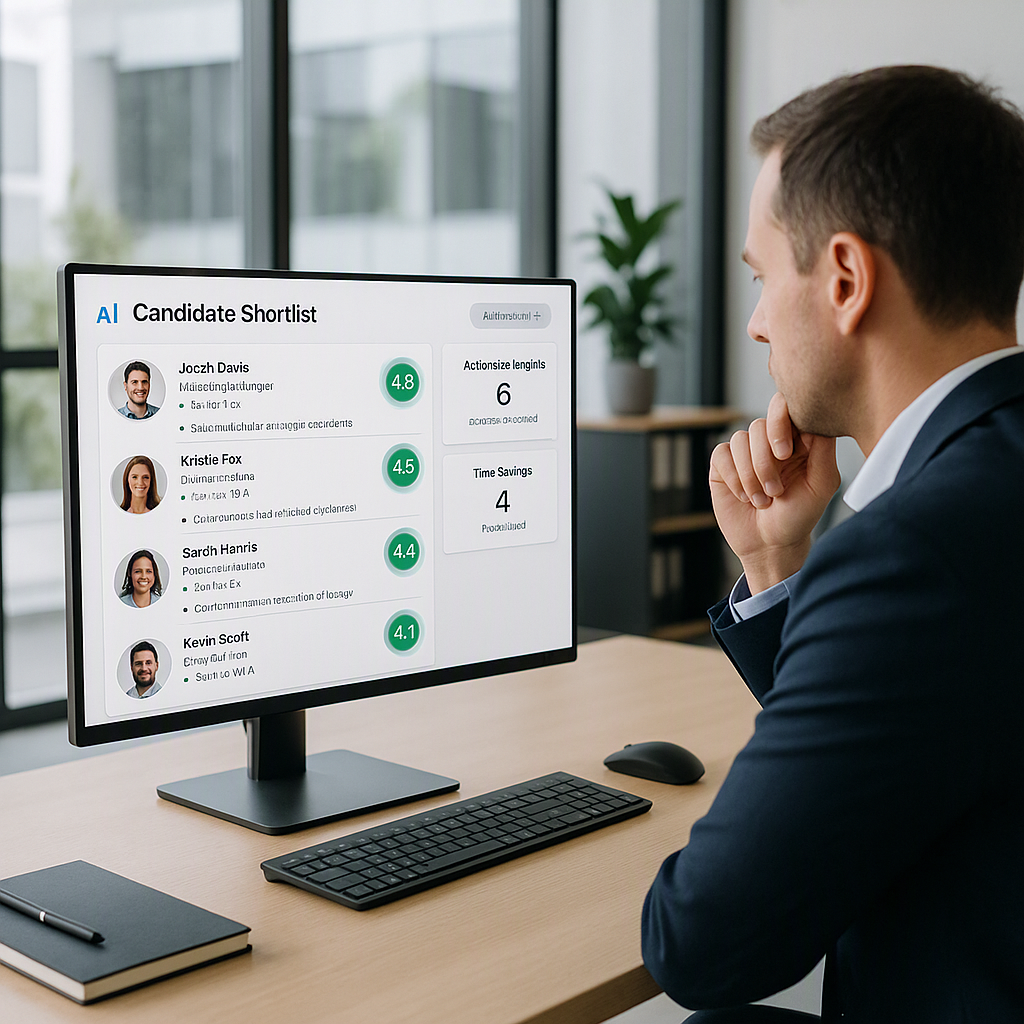
That’s where AI-powered tools like TalentNext completely change the game. Here’s how it works:
- Upload in Bulk: Instead of opening resumes one by one, you upload hundreds at once.
- AI Analysis: The tool scans each resume for relevant skills, experience, and keywords based on your job description.
- Scoring: Candidates are ranked by how well they match the role.
Within minutes, you have a shortlist of top candidates. No more keyword-hunting or second-guessing. Just actionable insights.
Why this matters:
- Time savings: According to TalentNext’s own data, AI can cut screening time by 75%. That’s nearly three workdays saved for every role you hire.
- Consistency: Humans get tired or distracted, but AI evaluates every resume the same way.
- Better focus: You spend your time connecting with qualified candidates, not buried in admin work.
Step 5: Conducting Interviews
Once you’ve identified your top candidates, it’s time to meet them. This is another step where AI can assist, though it’s far from perfect. Some platforms offer AI-driven video interviews that analyze tone, word choice, and body language. But let’s be honest—most candidates (and recruiters) hate these.
In my view, AI should stay out of this step. Focus on making interviews conversational and human. What AI can help with is scheduling. Tools that sync with your calendar and automate invites? Worth every penny.
Interview best practices:
- Ask role-specific questions: Skip generic questions like “What’s your biggest weakness?” Instead, ask about past projects or how they’d approach specific challenges in the role.
- Sell the role: Don’t forget that candidates are assessing you too. Share why your company is a great place to work and what makes the team unique.
- Use structured interviews: Have a consistent set of questions for all candidates to ensure fairness.
Step 6: Evaluating Candidates
Here’s where things get tricky. How do you compare candidates fairly? One person might have stronger technical skills, but another has better cultural fit.
AI can help here by generating scorecards. Tools like TalentNext let you see how each candidate ranks based on the job criteria. But the final decision is still on you. Use the data as a guide, not a crutch.
Decision framework:
| Criteria | Candidate A | Candidate B |
|---|---|---|
| Technical Skills | 9/10 | 8/10 |
| Cultural Fit | 7/10 | 9/10 |
| Leadership Potential | 8/10 | 6/10 |
| Overall Match Score | 8.3/10 | 7.7/10 |
Step 7: Making the Offer
The last step is often the easiest—if you’ve done everything else right. Still, you’d be surprised how many offers fall apart at this stage. Misaligned expectations, slow responses, or even just bad timing can cost you a great hire.
AI doesn’t play a huge role here, but it can nudge you in the right direction. Some tools analyze past offers to suggest competitive salary ranges. Others track candidate communication so you don’t drop the ball.
Final thoughts:
- Don’t drag your feet: The best candidates have options. If you’re ready to make an offer, act quickly.
- Be transparent: Clearly outline timelines and next steps. If paperwork takes two weeks, let them know upfront.
Where AI Works Best
If you take one thing away from this, let it be this: AI won’t replace recruiters. But it will make your life easier—especially during the most painful parts of the process, like resume screening.
Tools like TalentNext are built to handle the grunt work, so you can focus on what really matters: finding and connecting with the best talent.
Ready to save hours on your next hire? Get started for free →